




Your shopping cart is currently empty.
How Surge Brake Actuators Work and How to Pick One: Capacity, Ball Size, Drum vs Disc and Mounting
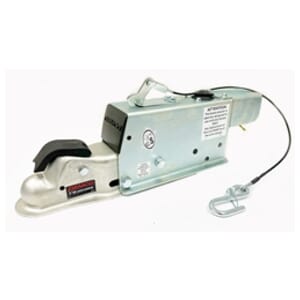
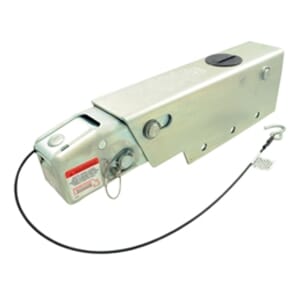
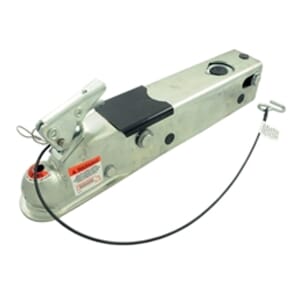
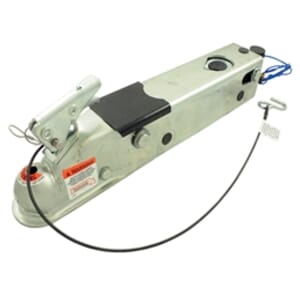
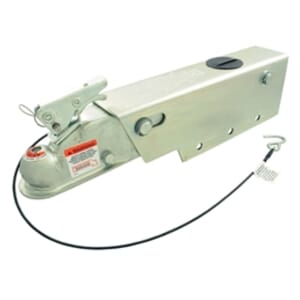
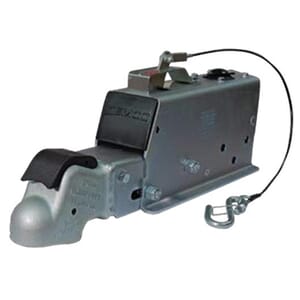
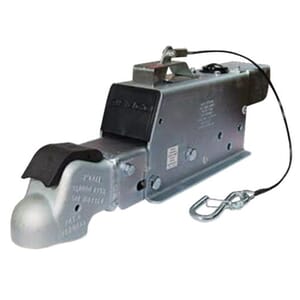
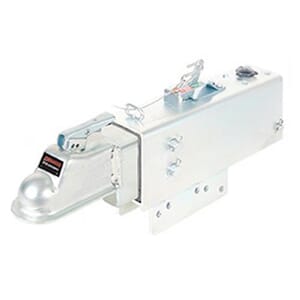
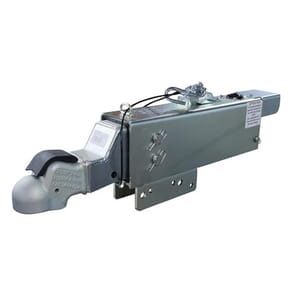
A surge brake actuator is the part on the front of a trailer tongue that works the trailer's hydraulic brakes without any wiring to a brake controller. It is a coupler and a brake master cylinder built into one housing. When the tow vehicle slows down, the trailer pushes forward, the actuator squeezes together, and that push turns into brake pressure at the trailer wheels.
This guide explains how a surge actuator works and then walks through picking one: trailer weight, ball size, drum or disc brakes, how it mounts to the tongue, and what it needs for backing up. Specifications come from the Dexter Light Duty Surge Actuator Installation Manual (2024), the UFP by Dexter catalog (07/2016), Dexter product bulletins, and the 2026 Demco Trailer Components catalog. Ratings are quoted as each catalog prints them.
Key takeaways
- A surge actuator brakes the trailer by the trailer's own push. Dexter's manual says it works by the "surge" or "push" of the trailer toward the tow vehicle, which automatically synchronizes the trailer brakes with the tow vehicle brakes. The actuator telescopes together and applies force to the master cylinder, supplying hydraulic pressure to the trailer brakes.
- Size it to the loaded trailer. Each actuator carries a G.V.W.R. rating. Dexter's current light duty actuators are printed at 6,600, 7,500 and 8,500 lbs. Demco's actuators are available in 7000 lb. to 20,000 lb. G.V.W.R. models.
- Match the actuator to the brakes. Dexter says drum brake actuators cannot be used on disc brake trailers and vice versa, disc brake actuators also require an electric solenoid, and drum brake actuators must be used with free-backing drum brakes.
- Match the coupler to the ball. Actuators are sold with a 2 in. ball socket, a 2-5/16 in. ball socket, or a channel front that takes a separate coupler. Dexter warns not to use a multi-piece, incorrectly sized, worn or damaged ball.
- It is not a parking brake. Dexter says do not use an actuator as a parking brake, and the breakaway system is not a parking brake either. It is designed to operate if the trailer and the safety cables or chains have failed.
Terms used in this guide
- Surge actuator: A coupler and hydraulic master cylinder in one housing, mounted on the trailer tongue. It uses the trailer's forward push during braking to apply the trailer's hydraulic brakes.
- Inner member and outer member: Dexter's names for the two halves. The inner member holds the coupler and master cylinder and slides inside the outer member, which bolts or welds to the tongue. Dexter sells inner members by themselves for replacement.
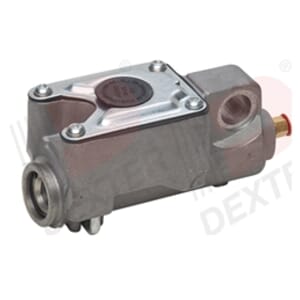
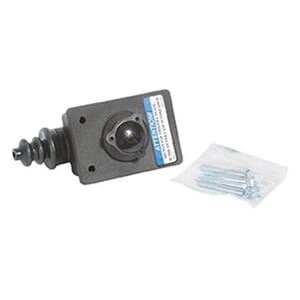
- Master cylinder: The part inside the actuator that turns the push into brake fluid pressure. Dexter and Demco sell separate master cylinders for drum and disc brakes.
- G.V.W.R.: Gross vehicle weight rating, the most the loaded trailer may weigh. Actuator capacity is printed as G.V.W.R.
- Free-backing drum brakes: Hydraulic drum brakes made for use with a surge actuator. Dexter's manual requires them with drum brake actuators.
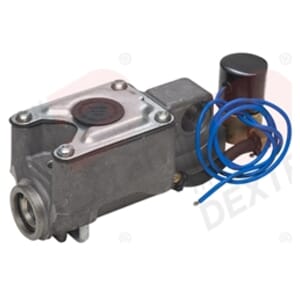
- Reverse solenoid: An electric valve that lets the trailer back up without the surge brakes applying. Dexter wires it to the reverse lamp circuit of the tow vehicle. Demco's catalog lists inline, bypass and blocking solenoid kits.
- Manual lockout: A hand-set kit sold for some actuators to keep the brakes from applying when backing up. Dexter calls its kit a Consumer Lockout Kit; Demco sells manual lockout kits by actuator model.
- Breakaway cable: A cable from the actuator to the tow vehicle. If the trailer separates, it pulls and applies the trailer brakes.
- Coupler channel: On channel-front actuators, the front piece that takes a bolt-on coupler. Demco offers channel down, center and up positions to set coupler height.
How a surge actuator works
When the tow vehicle brakes, the trailer keeps rolling and pushes against the hitch ball. The actuator's inner member slides back into the outer member and pushes on the master cylinder. That sends brake fluid pressure down the brake lines to the trailer brakes. The harder the tow vehicle stops, the harder the trailer pushes, and the harder the trailer brakes apply. When the tow vehicle speeds up again, the actuator extends and the pressure releases.
Because it runs on the push, a few things follow from Dexter's manual:
- The actuator must be free to telescope. Any control device that restricts it, including certain sway control devices, cannot be used. Weight-distributing hitches designed for use with surge actuators may be used and must allow 6-8 in. free chain length.
- There are no adjustments on the actuator, and the coupler latch must not be modified to fit a ball or make up for wear.
- The actuator may not work properly if the trailer is not level. The tongue should be parallel to the ground.
- The actuator will not operate when backing down a hill, so the tow vehicle brakes are your only stopping power.
- Brakes and actuators can overheat and fade after long periods of braking.
Step 1: Size the actuator to the loaded trailer
Start with the loaded trailer weight and choose an actuator whose G.V.W.R. covers it. Dexter adds that the tow vehicle and towing parts must also be rated to match the trailer G.V.W.R., and that you should not exceed the maximum tongue weight rating of your tow vehicle or its hitch. If you are not sure of your trailer's weight, see Choosing Trailer Axle Capacity: Hitch Weight, GAWR, Wheels and Tires.
Dexter's current light duty line, from the 2024 installation manual:
| Dexter light duty actuator | G.V.W.R. as printed | Tongue weight as printed | Ball size as printed | Model (for reference) |
|---|---|---|---|---|
| Standard profile, Drop-N-Go self-latching coupler | 6,600 lbs. | 330 - 660 lbs. | 2 in. and 50mm | DX6.6 |
| Standard profile, Drop-N-Go self-latching coupler | 7,500 lbs. | 375 - 750 lbs. | 2 in. and 50mm | DX7.5 |
| Standard profile, Drop-N-Go self-latching coupler | 8,500 lbs. | 425 - 850 lbs. | 2 in. | DX8.5 |
| Low profile, manual coupler | 7,500 lbs. | 375 - 750 lbs. | 2 in. | DX7.5L |
| Low profile, lever lock coupler | 7,500 lbs. | 375 - 750 lbs. | 2 in. | DX7.5L |
| Low profile, Drop-N-Go self-latching coupler | 8,500 lbs. | 425 - 850 lbs. | 2 in. | DX8.5L |
| Low profile, Drop-N-Go self-latching coupler | 8,500 lbs. | 425 - 850 lbs. | 2-5/16 in. | DX8.5L - 2-5/16" |
Table note: The manual says these actuators fit 3 in. wide tongues in heights of 3 in., 4 in. and 5 in. The low profile actuators are the current versions of the former UFP line. Dexter Product Bulletin 461 says the low profile 8,500 lb. actuator with a 2 in. coupler was formerly the UFP XR-84, and the 2-5/16 in. version replaces the former UFP A-84. The manual also refers to "Model DX7.5L A-75." The older UFP catalog printed the XR-84 and A-84 at 8,400 lb., so you may see either number on a tag.
For heavier trailers, Demco's catalog runs much higher. Demco names its actuators by model, and the model number tracks the capacity:
| Demco actuator | G.V.W.R. as printed | Coupler options listed | Model (for reference) |
|---|---|---|---|
| 7,000 lb. actuator | 7000 LB. | 2 in. EZ-Latch | DA70 |
| 7,500 lb. actuator | 7500 LB. | 2 in. EZ-Latch | DA75 |
| 8,600 lb. actuator | 8600 LB. | 2 in. EZ-Latch | DA86 |
| 8,000 lb. actuator | 8000 LB. (7000 LB. on the 2 in. Slide-Lok drum models) | 2 in. or 2-5/16 in. EZ-Latch, 2 in. or 2-5/16 in. Slide-Lok, or a channel or flat plate front with the coupler not included | DA91 |
| 12,500 lb. actuator | 12,500 LB. | 2-5/16 in. EZ-Latch, or channel or flat plate front | DA10 |
| 16,000 lb. actuator | 16,000 LB. | 2-5/16 in. EZ-Latch | DA16 |
| 20,000 lb. actuator | 20,000 LB. | 2-5/16 in. EZ-Latch, or channel or flat plate front | DA20 |
Table note: From the 2026 Demco Trailer Components catalog. Demco says its actuators fit standard 3 in. tongues, with 4 in. available as an option, and 50-degree A-frame mounts are available. For 3 or more axles, Demco's 20,000 lb. disc brake actuators have an optional 1-1/4 in. bore aluminum master cylinder and heavy-duty push rod for the higher line pressures required.
Step 2: Match the actuator to drum or disc brakes
Surge actuators are built for one brake type. Dexter's rule is simple: drum brake actuators cannot be used on disc brake trailers and vice versa. Both Dexter and Demco list each actuator, inner member and master cylinder as drum or disc.
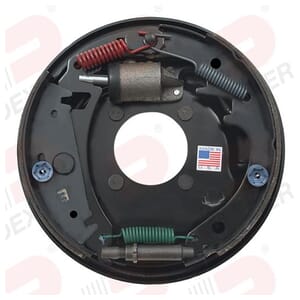
- Drum brakes: Dexter says drum brake actuators must be used with free-backing drum brakes. Dexter's catalog lists its hydraulic drum brakes as free backing. An aftermarket reverse solenoid can be added to a drum brake actuator.
- Disc brakes: Dexter says disc brake actuators require an electric solenoid, and its disc brake actuators come standard with a reverse solenoid. Demco's disc brake actuators are listed with an inline, bypass or blocking solenoid, some with a manual lockout as well.
- Switching from drum to disc: Demco sells conversion kits that change a standard drum master cylinder to disc with a bypass, and notes they are factory installed only.
Dexter recommends having brakes on all axles, and notes that state brake laws are minimum standards. For more on brake kits for a hydraulic system, see How to Choose a TruRyde Drum Brake Kit: Electric vs Hydraulic, Capacity and Axle Count and How to Choose a DeeMaxx Disc Brake Kit: Slip-Over vs Integral, Capacity and Axle Count.
Step 3: Choose the coupler and ball size
The actuator is also your coupler, so its ball size must match the hitch ball. Dexter's manual says using the correct ball size is critical, and a loose fit between the coupler and the ball can let the actuator and ball separate.
- Self-latching couplers: Dexter's Drop-N-Go and Demco's EZ-Latch latch on their own when the coupler is lowered onto the ball. Demco says its EZ-Latch couplers exceed all required SAE J684 safety standards without the use of a safety pin. Dexter's Drop-N-Go still uses a hitch pin in the side of the coupler.
- Lever lock and manual couplers: You close the handle by hand. Dexter says the handle should close with minimal force. If it will not close, the ball is not fully in the socket or is oversized or egg-shaped. Do not force it.
- Channel and flat plate fronts: Some Demco actuators come with a channel or flat plate front and no coupler, so you can bolt on the coupler you need. The channel can sit down, center or up to set coupler height.
For ball sizes and latch types in more detail, see How to Choose a Trailer Coupler: Ball Size, Tongue Type, Latch and Capacity.
Step 4: Choose how it mounts to the tongue
Actuators bolt on or weld on, and they are made for straight tongues or A-frame tongues.
- Bolt-on: Dexter's bolt-on actuators come fully assembled and bolt on with 1/2 in. x 4 in. grade 5 bolts (not included), torqued to 80 ft.-lbs. Spacer tubes for reinforcement are required on tongues less than 3/16 in. thick, and attachment hardware needs to be rated at least 150% of the trailer G.V.W.R.
- Weld-on: Dexter says to weld according to AWS specifications, with the inner member removed first and reinstalled after. Demco sells unassembled weld-on actuator kits that come boxed for assembly after welding and paint.
- Straight tongue sizes: The older UFP by Dexter catalog lists outer members by length and tongue size, such as a 17.5 in. weld-on housing for a 3 in. x 3 in. or 3 in. x 4 in. straight tongue, 19 in. housings for 3 in. x 5 in. tongues, and a 14.5 in. zinc bolt-on top mount.
- A-frame: Demco lists 50-degree A-frame mounts. Dexter notes A-frame trailers may need added structure to withstand torsional twist, with the cross member as close to the actuator as possible.
If you are only replacing a worn actuator, the easiest match is often a replacement inner member that fits your existing outer member. Have the brand, the drum or disc type, the tag or part number and the tongue size ready.
Step 5: Plan for backing up
Because the trailer pushes on the actuator when you back up, a surge system needs a way to keep the brakes from fighting you in reverse.
- Reverse solenoid: Dexter wires one solenoid lead to the center pin of the trailer connector (usually the yellow or purple wire) and grounds the other to the trailer frame. The center pin of the 7-way connector must be attached to the reverse lamp circuit. Dexter warns that connecting to the wrong plug will cause the brakes to fail. Do not use thread sealant on the brake line connection to the solenoid.
- Manual lockout: Dexter and Demco both sell lockout kits for their actuators. Follow the kit's instructions for when to set and release it.
- Replacing a Dexter solenoid: Dexter Product Bulletin 511 (December 2024) says the separate coil and solenoid assembly (054-101-00) and its kit (K71-755-00) are discontinued. To replace a solenoid and coil, replace the complete master cylinder with the Master Cylinder Kit (K71-757-00), which has an integral solenoid and fits both current and earlier low profile actuators.
Step 6: Bleed the brakes and check before towing
A new actuator, master cylinder or brake line means the system has to be bled. Dexter's manual gives these rules:
- Do not reuse brake fluid. Always use fresh DOT 3 fluid from a fresh container.
- Start bleeding at the brake farthest along the brake line from the actuator.
- If you use a pressure bleeder, do not exceed 18 psi, or the master cylinder reservoir diaphragm can be damaged and leak. Demco sells a master cylinder adapter for use with a power bleeder.
- Keep the reservoir at least half full the whole time. If it runs dry, air gets in and you have to start over.
- When done, fill the reservoir to the indicator on the plug. Do not overfill.
Before the first trip, Dexter's road test is to unplug the trailer from the tow vehicle (which also disconnects the solenoid) and try to back the trailer up a slight incline. It should be difficult or not possible. If it backs up easily, there is still air in the system. Recheck the fluid after the test and check every fitting for leaks.
Every time you hook up, connect the safety chains crossed under the tongue and hook the actuator's breakaway cable to the tow vehicle only, never to the safety chains. On Dexter's standard actuators, make sure the breakaway stop button is in the normal operating position before towing. For chain ratings and hookup, see Trailer D-Rings and Safety Chains: Working Load Limit Explained.
Common actuator replacement parts
Many worn actuators can be rebuilt instead of replaced. Match each part to the actuator brand, model and brake type:
| Part | What it replaces | Shop |
|---|---|---|
| Inner member, disc with solenoid (UFP by Dexter, 7,500 lb.) | The sliding coupler and master cylinder half of the actuator | 7,500 lb. disc inner member with solenoid |
| Master cylinder kit, disc (UFP by Dexter, all models) | Disc brake master cylinder with integral solenoid | Disc master cylinder kit |
| Master cylinder kit, drum (UFP by Dexter, all models) | Drum brake master cylinder | Drum master cylinder kit |
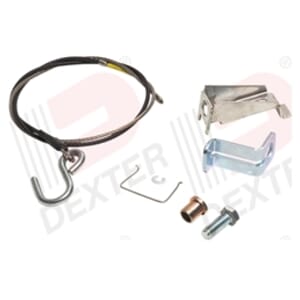
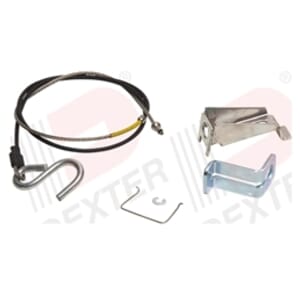
| Emergency cable replacement kit (UFP by Dexter) | Breakaway cable and pushrod release bracket | 7,500 lb. lever lock kit or 8,400 lb. kit |
| Consumer lockout kit (UFP by Dexter) | Manual lockout for backing up | Consumer lockout kit |
| Demco master cylinder, drum | Composite drum brake master cylinder | Demco drum master cylinder |
| Demco manual lockout kit (12,500 lb. actuator) | Manual lockout for backing up | Demco manual lockout kit |
Table note: Part numbers for reference: K99-075-20, K71-757-00, K71-756-00, K71-761-00, K71-763-00, K71-769-00, Demco 5650 and Demco 6375. Dexter's catalog lists the consumer lockout kit for its A-60, A-75, A-84, AC-84 and XR-84 actuators. Demco's catalog lists kit 6375 for its 12,500 lb. actuator; its 16,000 and 20,000 lb. actuators use lockout kit 6422.
Surge actuator checklist
- Loaded trailer weight, and an actuator G.V.W.R. that covers it.
- Tow vehicle and hitch tongue weight ratings, checked against the actuator's printed tongue weight range.
- Brake type on every axle: drum (free backing) or disc.
- Number of braked axles, especially for 3 or more.
- Ball size: 2 in., 2-5/16 in. or 50mm, and the coupler type you want.
- Tongue: straight or A-frame, width, height and wall thickness.
- Mount: bolt-on or weld-on, and the right grade 5 hardware for bolt-on.
- For backing up: reverse solenoid wired to the reverse lamp circuit, or a lockout kit.
- Fresh DOT 3 brake fluid for bleeding.
- Breakaway cable in good shape and hooked to the tow vehicle only.
- For a replacement: brand, part number from the old actuator and whether you need a full actuator or just an inner member.
Frequently asked questions
How does a surge brake actuator work?
When the tow vehicle slows, the trailer pushes forward on the ball. The actuator telescopes together and pushes on its master cylinder, which sends hydraulic pressure to the trailer brakes. No brake controller is needed.
Can I use a drum brake actuator with disc brakes?
No. Dexter says drum brake actuators cannot be used on disc brake trailers and vice versa. Disc brake actuators also need an electric solenoid.
Why do surge brakes lock up when I back up?
Backing up pushes the actuator together the same way braking does. A reverse solenoid wired to the tow vehicle's reverse lights, or a lockout kit, keeps the brakes from applying when you back up. Check the solenoid wiring first: Dexter says the 7-way center pin must be on the reverse lamp circuit.
What brake fluid does a surge actuator use?
Dexter's manual calls for fresh DOT 3 brake fluid from a fresh container, and says never to reuse brake fluid.
Can I use a weight-distributing hitch with surge brakes?
Dexter says equalizing or weight-distributing hitches designed for use with surge actuators may be used and must allow 6-8 in. free chain length. Sway control devices that keep the actuator from telescoping cannot be used.
Is the breakaway a parking brake?
No. Dexter says the breakaway system is not a parking brake and the actuator should not be used as one. The breakaway is there in case the trailer and the safety chains or cables have failed.
What if my actuator is an older UFP model?
Dexter acquired UFP and carries its actuators forward under Dexter names. For example, Dexter says its low profile 8,500 lb. actuator with a 2 in. coupler was formerly the UFP XR-84, and the 2-5/16 in. version replaces the former UFP A-84. Replacement inner members, master cylinders, breakaway cable kits and hitch pin kits are still sold by model. Call us with the part number from your actuator.
References
- Dexter Axle. Light Duty Surge Actuator Installation Manual, 6,600 - 8,500 lbs. capacity (LIT-750-00, 2024.02): product identification, brake and towing requirements, installation, reverse solenoid, brake bleeding, hitching, breakaway and road testing.
- Dexter Axle. UFP by Dexter catalog (07/2016): surge actuator models, ratings, outer members and actuator replacement parts.
- Dexter Axle. Product Bulletin 406, Master Cylinder Upgrade (May 9, 2019).
- Dexter Axle. Product Bulletin 411, New Product Line-up for Dexter's DX7.5 Surge Actuators (October 22, 2019).
- Dexter Axle. Product Bulletin 461, DX8.5L with 2-5/16" Coupler Replacing Former UFP A-84 Surge Actuator (May 16, 2022).
- Dexter Axle. Product Bulletin 511, Solenoid Assembly (December 23, 2024).
- Demco. 2026 Trailer Components Catalog: Demco actuators, configurations, mounting, solenoid and lockout kits, unassembled kits, replacement components and actuator brake bleeder.
- Southwest Wheel product listings for Dexter UFP and Demco actuators and actuator parts (titles as listed).
Related guides
- How to Choose a Trailer Coupler: Ball Size, Tongue Type, Latch and Capacity
- Trailer D-Rings and Safety Chains: Working Load Limit Explained
- How to Choose a TruRyde Drum Brake Kit: Electric vs Hydraulic, Capacity and Axle Count
- How to Choose a DeeMaxx Disc Brake Kit: Slip-Over vs Integral, Capacity and Axle Count
- Choosing Trailer Axle Capacity: Hitch Weight, GAWR, Wheels and Tires
Find the right surge actuator for your trailer
Have your loaded trailer weight, ball size, brake type and tongue size ready when you shop or call. For a replacement, bring the part number from your old actuator.
Looking for parts? See Dexter UFP Actuator Replacement Parts or Demco Actuator Replacement Parts.
Call Southwest Wheel at 1-800-866-3336.
Southwest Wheel - Your Trailers Best Friend Since 1919.
Shop Related Products: How Surge Brake Actuators Work and How to Pick One: Capacity, Ball Size, Drum vs Disc and Mounting
Regular Price:
$766.71
Now:
$736.45


