

Your shopping cart is currently empty.
Replacing Trailer Shackles, Hangers and Equalizers: What to Check Before Ordering
Replacing trailer shackles, hangers and equalizers starts with checking the whole leaf spring suspension, not ordering the first bracket that looks close. Worn bolt holes, loose fasteners and worn bushings deserve attention. So does a suspension joint that cannot move as intended. The replacement parts must fit the spring type and work together through the suspension's travel.
This guide helps you recognize the reasons for inspection and choose new replacement parts. It is not an installation procedure. Have a qualified repair professional evaluate damaged attachments and perform work that requires disassembly, trailer support or welding.
Key takeaway: replace worn parts with a matched combination
- Inspect more than the obvious worn part. Check the related shackles, bolts, bushings, equalizers and hangers before deciding what to order.
- Match the spring and axle layout. Double eye and slipper suspensions do not use interchangeable attachment arrangements.
- Preserve the intended movement. Spring eyes and equalizers need to pivot, but a shackle bolt spinning in its hanger is a different problem.
- Choose compatible parts, not a mixture of similar-looking pieces. A matched set means the correct combination for your suspension, not a requirement to replace every unworn component.
What the shackles, hangers and equalizers do
Hangers provide attachment points between the trailer frame and leaf spring suspension. In a double eye system, the shackle links accommodate movement as a loaded spring lengthens. On multiple axle suspensions, the equalizer adds movement between the springs and helps transfer load between axles. Dexter describes these functions in its Operation Maintenance Service Manual, page 64, and Applications Guide, page 9.
These parts have different jobs, so replacing one is not the same as replacing the others. New shackle links do not renew worn bushings. A new equalizer does not correct an unsuitable hanger combination. Review the complete attachment arrangement even when only one part first caught your attention.
For spring identification, use Double Eye vs Slipper Leaf Springs. That guide covers the spring ends and matching kit families; this one focuses on the replacement decision.
Wear signs that call for a closer inspection
Dexter's service manual calls for visual inspection of all suspension components at least every 6,000 miles for excess wear, elongated bolt holes and loosening fasteners (page 66, Inspection and Replacement). Use those conditions as reasons to inspect the assembly, not as permission to keep using a damaged part until the next mileage milestone.
- Elongated bolt holes: include the surrounding attachment and mating hardware in the inspection rather than assuming a new bolt alone resolves the wear.
- Loose fasteners: have the fastener type and related components checked. Do not use a single tightening rule for every suspension pivot.
- Worn spring-eye bushings: Dexter identifies these as replacement items, along with sagging or broken springs (service manual, page 67).
- Worn equalizer bushings: Dexter addresses equalizer and equalizer-bushing replacement separately in its service instructions (pages 67-68). Determine which parts actually need replacement.
There is no universal hole-wear measurement or fixed replacement age supplied here. The correct decision depends on the actual component and its applicable service instructions. Do not estimate a usable wear limit from another trailer's parts.
If uneven tire wear prompted the inspection, see Trailer Axle Alignment and Uneven Tire Wear. Do not assume a replacement equalizer or axle is the cure before the suspension has been evaluated.
Binding is different from a bolt turning in the hanger
A joint can have a movement problem even when the reason for concern is not an elongated hole. Dexter states: "Spring eyes and equalizers must be free to rotate. Binding can lead to unsatisfactory ride performance and possible spring failure." (Applications Guide, page 12, Installation Procedures for Leaf Spring Axles.)
If you suspect binding, have the repair professional verify the parts combination and the fastener instructions for that joint. Do not try to cure restricted movement by guessing at a looser nut setting. This article does not provide a pivot test or a disassembly procedure.
Free suspension movement does not mean the shackle bolt should turn in the hanger. Dexter separately warns: "Shackle bolts that are free to rotate will severely limit the service life of the hangers." (Applications Guide, page 13, Installation Suggestions.) Keep those two requirements distinct when discussing a repair: the spring eye and equalizer must articulate, while the bolt must be retained as its design requires.
Follow the instructions for the exact hardware fitted to the trailer. An applicable Dexter bulletin overrides the catalog or manual where they disagree. No general torque value in a shopping guide should replace those component-specific instructions.
Match spring type, hanger height and equalizer geometry
Dexter's double eye illustration uses pivoting shackle links. Its slipper illustration uses a spring end sliding against a wear surface in the hanger or equalizer (service manual, pages 64-65). A double eye shackle kit is not a replacement attachment system for a slipper spring merely because both trailers have the same axle rating.
Hanger height matters as well as the distance between hangers. Dexter states, "Not all combinations of equalizers and hangers are suitable." Its Applications Guide explains that short equalizer hangers can allow the spring eye to contact the frame during articulation and overload the spring (page 9, Axle Attachment Systems).
That is why an equalizer selected by shape alone is not enough. Have the original part identification, equalizer dimensions, hanger dimensions and spring specification checked together. Do not choose a taller or shorter hanger as an unverified shortcut to a different trailer height.
Keep the layout dimensions with Hanger Spacing for Single and Tandem Leaf Spring Axles. Use the entry for the actual spring, kit and axle layout instead of borrowing spacing from a different suspension.
Should you buy individual parts or a kit?
Individual replacement parts
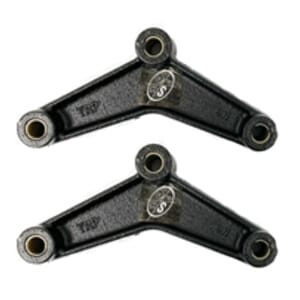
Individual parts make sense when inspection has established the repair scope and the replacement can be matched to the existing assembly. Record the original part number where available. For shackle links, compare the specified hole spacing and hardware; for equalizers and hangers, compare the dimensions and application, not just the silhouette.
Browse Trailer Equalizers for replacement choices. A category listing is a starting point, not confirmation that every listed equalizer fits your trailer.
Matched attaching kits
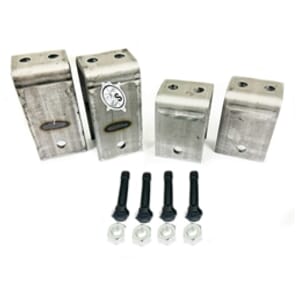
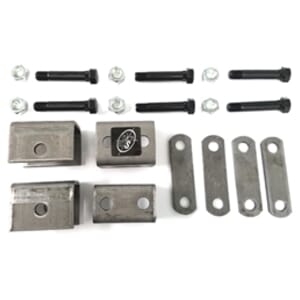
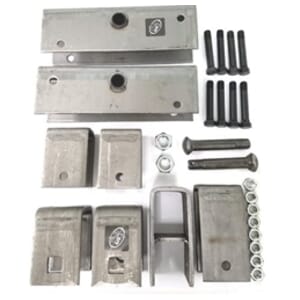
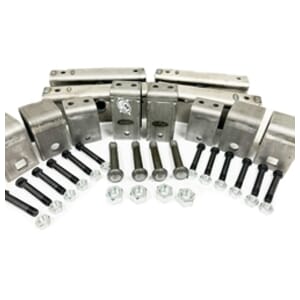
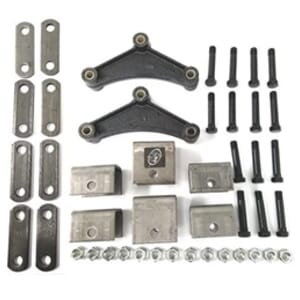
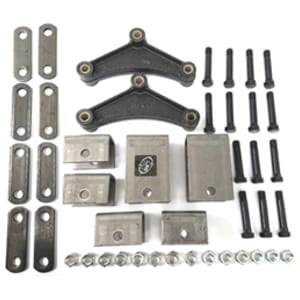
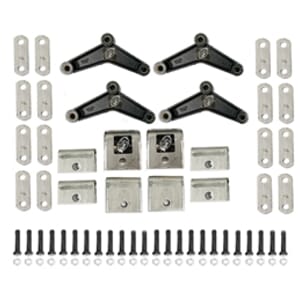
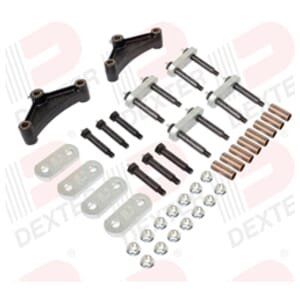
A hanger or shackle kit can make the order easier to review when several related parts need replacement. Check the contents carefully. A hanger kit, a shackle repair kit and a complete suspension kit are not the same purchase. Do not assume the box includes springs, frame hangers or U-bolts unless the selected listing says so.
Southwest Wheel's attaching-kit choices include single, tandem and triple axle layouts, with separate double eye and slipper applications. Select the correct family first, then verify the specific kit. Buying a larger kit does not make mismatched components compatible, and buying a kit does not establish that every existing part needs replacement.
If you are considering a rubberized equalizer for a double eye suspension, use How Lippert Equa-Flex Works and How to Pick the Right Tandem or Triple Kit for that separate decision. Do not apply its double eye kit choices to slipper springs.
What to have ready before ordering
- Spring type, width, identification and specified length.
- Axle count and the existing hanger-kit or suspension identification.
- Equalizer identification and dimensions, plus the matching hanger dimensions.
- Shackle-link hole spacing and the specified bolt and bushing details.
- Which parts inspection found worn, loose or restricted in movement.
- Whether the repair also includes springs or their axle-clamping hardware.
Use identification and measurements to confirm an application, not to redesign the suspension from a shopping list. If existing parts cannot be identified reliably, resolve that uncertainty with the trailer manufacturer or repair professional before ordering. Southwest Wheel can help you choose new replacement products; it does not provide alignment or axle-install service.
Do not overlook lubrication and spring hardware
Dexter specifies greasing wet bolts and equalizers every 3,000 miles in the service manual's Inspection and Replacement section (page 66). Follow the instructions for the fitted components rather than assuming every bolt is greaseable. Lubrication is maintenance, not a substitute for replacing a worn bushing or damaged attachment.
If the work also involves servicing or replacing a leaf spring, Dexter Product Bulletin 488 requires new U-bolts and hardware. See U-Bolt Torque and Replacement for Trailer Axles for that related subject. Keep the order complete without treating every shackle-only repair as a spring replacement.
Have the repair completed under the applicable manufacturer instructions. Do not go beneath a trailer that is not properly supported. Identifying and ordering parts is not a substitute for the support precautions or service procedures in the suspension manual.
References
- Dexter Operation Maintenance Service Manual, 600-8,000 lbs. Axle Capacity: pages 64-65 (Double Eye Leaf Springs; Slipper Leaf Springs), pages 66-68 (Inspection and Replacement).
- Dexter Applications Guide, LIT-008-00: page 9 (Axle Attachment Systems), page 12 (Installation Procedures for Leaf Spring Axles), page 13 (Installation Suggestions).
- Dexter Product Bulletin 488, U-Bolt Thread Change on 3.50" Diameter Axle Tubing: page 1 (leaf spring service and replacement hardware requirement).
Ready to match your replacement suspension parts?
Verify fitment before ordering or contact Southwest Wheel for assistance.
Questions about matching new shackles, hangers or equalizers? Call Southwest Wheel at 1-800-866-3336.
Southwest Wheel - Your Trailers Best Friend Since 1919.


