

Your shopping cart is currently empty.
Double Eye vs Slipper Leaf Springs: How to Tell Them Apart and Match Hangers and Equalizers
Double eye and slipper leaf springs do the same basic job, but they do not attach to a trailer the same way. Before you order a replacement spring, look at its ends. Then match the spring to the hangers, shackles and, on a tandem or triple, the equalizers that belong with that suspension.
This guide explains the spring types, not hanger layout dimensions. Once you know which spring you have, use Hanger Spacing for Single and Tandem Leaf Spring Axles for the matching spacing chart and hanger kit. On Dexter equipment, follow the instructions for the specific suspension. An applicable Dexter bulletin overrides the catalog or manual where they disagree.
Key takeaway
- Double eye means an eye at both ends. Shackle links let the spring move as it lengthens under load. Dexter describes this on page 64 of its 2,000-8,000 lbs. Axle Service Manual.
- Slipper means one eye and a sliding end. Dexter's manual shows a rear end captured in a hanger or equalizer, sliding against its wear surface (page 65).
- Match the system, not just the spring rating. Dexter warns that not all equalizer and hanger combinations are suitable (LIT-008-00, page 9).
- Do not borrow the other spring type's spacing chart. Use the chart for your spring and axle layout in the hanger-spacing guide.
- Inspect and maintain the moving parts. Dexter calls for visual suspension inspection at least every 6,000 miles and greasing wet bolts and equalizers every 3,000 miles (service manual, page 66).
Double eye vs slipper springs at a glance
| What to look for | Double eye | Slipper |
|---|---|---|
| Spring ends | An eye formed at each end, with bushings. | One eye; Dexter describes the other end as formed into a reverse curve. |
| Movement as the suspension works | Shackle links pivot to accommodate the spring lengthening under load. | The rear end slides against a wear surface in the rear hanger or equalizer. |
| Rear attachment | The spring eye connects through shackle links in the illustrated suspension. | The slipper end is captured in a hanger or equalizer with a keeper bolt. |
| Multiple axle layout | The equalizer adds movement and transfers load between axles. | The equalizer provides a slipper-end wear surface as part of the multiple axle layout. |
What is a double eye leaf spring?
A double eye spring has a rolled eye at each end. Dexter fits anti-friction bushings in those eyes for wear resistance. The spring is held to the axle tube with U-bolts and tie plates. As load flattens and lengthens the spring, the shackle links pivot so the suspension can move freely (service manual, page 64).
The distinction matters at the frame attachments. A double eye setup needs the correct shackle links and spring-eye hardware, not a rear pocket intended to carry a slipper end. On a tandem or triple, the equalizer and shackle arrangement must also match. Dexter's double eye illustration identifies the hangers, shackle links and equalizer as parts of that assembly (service manual, page 64).
What is a slipper leaf spring?
A slipper spring has an eye at one end rather than both. Dexter describes its illustrated slipper spring as having a reverse curve at the other end. The front eye bolts into the front hanger. The rear end is captured in the rear hanger or equalizer by a keeper bolt, and it slides against a wear surface as the suspension moves (service manual, page 65).
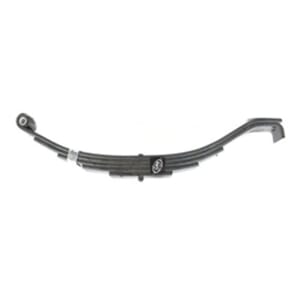
Do not use that one drawing to assume that every slipper spring has the same end profile. Southwest Wheel lists flat, hook, open and radius-end slipper spring categories. Identify the actual spring and its mating attachment before choosing a replacement. Start with Trailer Leaf Springs and match the product description, not just the word "slipper."
How to identify the spring type on your trailer
Look at both ends of the spring, not just the front eye. Both designs can have a bolted front eye. The other end is the useful distinction: another eye connected through shackle links points to double eye; an end carried on a sliding wear surface points to slipper. Compare the spring and its attachments with Dexter's illustrations on service manual pages 64-65.
Record the spring part number if readable, spring width, specified length, rating, axle count and hanger-kit identification if available. For a tandem or triple, include the equalizer identification. These details help distinguish products that look similar but belong to different kits. Do not order from axle capacity alone; use Choosing Trailer Axle Capacity: Hitch Weight, GAWR, Wheels and Tires for the wider capacity discussion.
Safety first: identifying a spring does not require taking the suspension apart. If access requires lifting the trailer, follow the trailer manufacturer's support instructions and Dexter's caution: "Do not lift or support the trailer on any part of the axle or suspension system. Never go under any trailer unless it is properly supported on jack stands which have been rated for the load. Improperly supported vehicles can fall unexpectedly and cause serious injury or death." (Service manual, page 67.)
Why the hanger kits and spacing are different
The two designs make room for movement in different ways: double eye uses pivoting shackle links; slipper uses a sliding spring end (Dexter service manual, pages 64-65). That is why identifying the spring comes before choosing its attaching kit. A kit for double eye springs is not a shortcut to assembling a slipper suspension, or the other way around.
Hanger height matters as well as the distance between hangers. Dexter states, "Not all combinations of equalizers and hangers are suitable." If the equalizer hangers are too short, a spring eye may contact the frame during suspension articulation and overload the spring (LIT-008-00, page 9).
The hanger-spacing guide separates double eye and slipper springs, spring lengths, and single, tandem and triple layouts. Use the entry that matches your spring and kit; do not substitute another chart because the axle rating is the same. The actual dimensions and spacing tables stay in Hanger Spacing for Single and Tandem Leaf Spring Axles, rather than being repeated here.
Which equalizers go with each spring type?
In multiple axle double eye suspensions, Dexter says the equalizer transfers instantaneous loads from one axle to another in an effort to equalize the load. Its slipper illustration also shows an equalizer, with a wear surface for the sliding spring end (service manual, pages 64-65). The word "equalizer" alone does not identify the right replacement.
The following are specific Southwest Wheel kit examples from the hanger-spacing guide, not universal equalizer interchange rules.
| Spring and layout | Hanger kit examples | Equalizer identified with those kits |
|---|---|---|
| Double eye, tandem | APT3BX and APT5BX | Two EQ-E1 equalizers. |
| Double eye, triple | APTT3BX and APTT5BX | Four EQ-E1 equalizers. |
| 2" slipper, tandem | APT288SEBX | Two EQ-4541 equalizers. |
| 2" slipper, triple | APT388SEBX | Four EQ-4541 equalizers. |
For a single axle, the guide lists APS1BX for double eye springs and APS188SEBX for 2" slipper springs. Those are single axle attaching kits, not the tandem or triple equalizer arrangements above. For replacement parts, browse Trailer Equalizers, but verify the original part and the complete hanger-kit application before ordering.
Choose a replacement as a matched suspension
- Identify the spring ends. Confirm double eye or the actual slipper-end design.
- Match the spring specification. Use the existing spring identification and the replacement product's dimensions and rating.
- Match the axle layout. Select the single, tandem or triple hanger kit listed for that spring type and application.
- Match the equalizer and related hardware. Use the kit's identified components, not a mixture assembled by appearance.
- Use the correct spacing guide. Have the builder or repair professional verify the layout and clearances for the selected suspension.
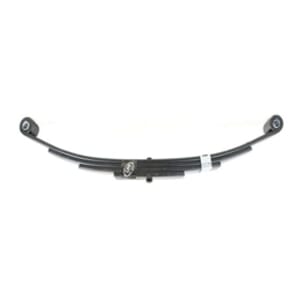
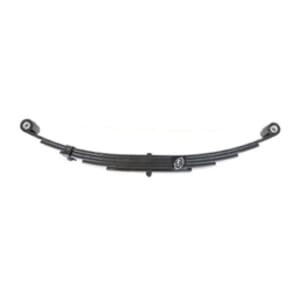
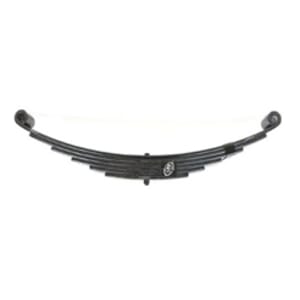
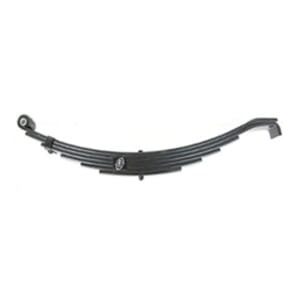
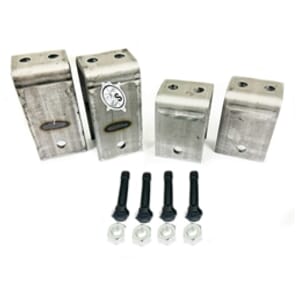
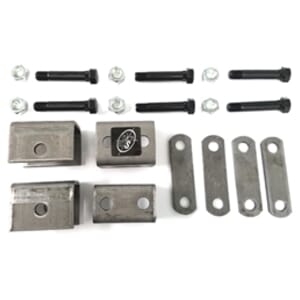
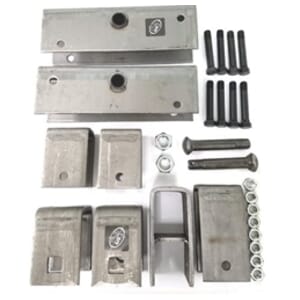
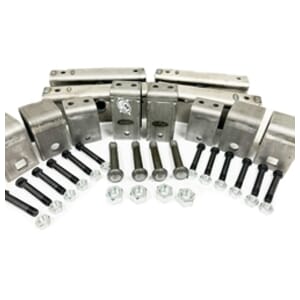
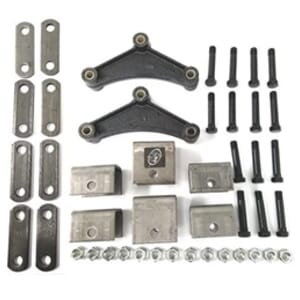
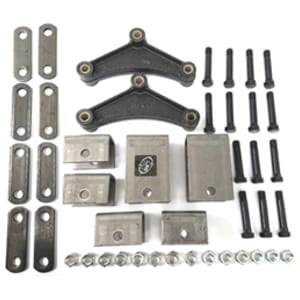
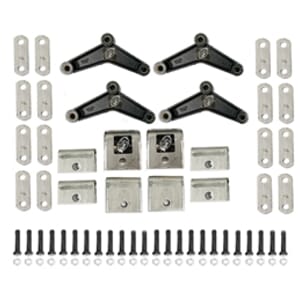
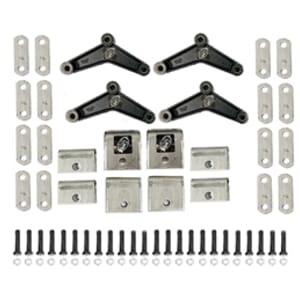
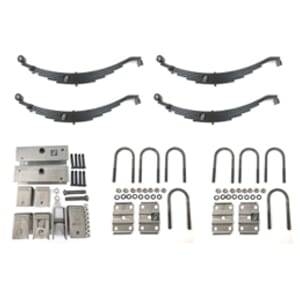
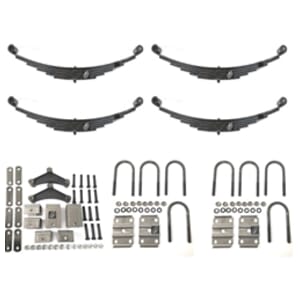
Southwest Wheel offers springs, attaching kits and complete suspension kits as new products. A hanger kit and a complete suspension kit are different purchases; check the listed contents rather than assuming a hanger kit includes springs. The mapped products accompanying this post include both double eye and slipper examples.
If you are replacing the axle as well, start with How to Identify Your Old Trailer Axle and Order a Dexter Replacement and Build a Complete Dexter Trailer Axle.
Inspection, lubrication and replacement hardware
Dexter calls for visually inspecting all suspension components at least every 6,000 miles for excess wear, elongated bolt holes and loose fasteners. All wet bolts and equalizers should be greased every 3,000 miles (service manual, page 66). Worn spring-eye bushings, sagging springs and broken springs are replacement items in Dexter's service procedure (page 67).
Moving joints must remain able to move. Dexter states, "Spring eyes and equalizers must be free to rotate. Binding can lead to unsatisfactory ride performance and possible spring failure." (LIT-008-00, page 12.) This does not mean the shackle bolt itself should spin in the hanger: Dexter separately warns that shackle bolts free to rotate severely limit hanger service life (page 13). Follow the instructions for the particular fastener rather than using one torque rule for every pivot.
Dexter Product Bulletin 488, page 1, states: "Always use new U-bolts and hardware when servicing or replacing a leaf spring on an existing axle." See U-Bolt Torque and Replacement for Trailer Axles for that subject. If uneven tire wear is what led you to inspect the springs, see Trailer Axle Alignment and Uneven Tire Wear rather than assuming a new spring or axle is the cure.
Frequently asked questions
How can I tell double eye from slipper leaf springs?
Check both ends. Double eye has an eye at each end. Dexter's slipper design has one eye and a rear end that slides in a hanger or equalizer (service manual, pages 64-65).
Is one spring type always better?
This is a fitment decision, not a universal ranking. Identify the existing suspension, then match the spring and attaching kit. Dexter warns that not all equalizer and hanger combinations are suitable (LIT-008-00, page 9).
Can I replace a double eye spring with a slipper spring?
Do not treat it as a spring-only swap. Dexter describes different attachment and movement arrangements for the two designs (service manual, pages 64-65). A proposed conversion needs a verified suspension layout and matching components.
Do double eye and slipper springs use the same hanger spacing?
Do not assume so. The hanger-spacing guide uses separate entries for the spring types and lengths. Use its chart for your spring and axle layout, not a dimension borrowed from a different suspension.
Does a single axle need a tandem equalizer kit?
No. The hanger-spacing guide lists separate single axle kits. Dexter describes equalizer load transfer in multiple axle installations (service manual, page 64).
Can any equalizer work with either spring type?
No universal interchange is established by these examples. Match the specific kit: the guide identifies EQ-E1 with the listed double eye kits and EQ-4541 with the listed 2" slipper kits. Dexter warns against unsuitable equalizer and hanger combinations (LIT-008-00, page 9).
How often should I inspect and grease the suspension?
Dexter specifies visual inspection at least every 6,000 miles and greasing wet bolts and equalizers every 3,000 miles (service manual, page 66). Follow the instructions for the components fitted to your trailer.
Can I reuse the U-bolts when replacing a spring?
Dexter Product Bulletin 488, page 1, says to always use new U-bolts and hardware when servicing or replacing a leaf spring on an existing axle. Use the U-bolt guide linked above for the related replacement guidance.
Building a new axle and suspension combination?
Build a Custom Dexter Trailer Axle
Need a stock size? See Pre-Configured Dexter Trailer Axles. Questions about matching new springs, hanger kits or equalizers? Call 1-800-866-3336.
Southwest Wheel - Your Trailers Best Friend Since 1919.
References
- Dexter 2,000-8,000 lbs. Axle Service Manual: page 64 (Double Eye Leaf Springs; shackle articulation; multiple axle equalizers), page 65 (Grease Lubricated Suspension Bushings; Slipper Leaf Springs), page 66 (Inspection and Replacement; lubrication intervals), page 67 (replacement conditions and trailer-support caution).
- LIT-008-00, Dexter Axle Applications Guide, June 2017: page 9 (Axle Attachment Systems; equalizer and hanger compatibility), page 12 (Installation Procedures for Leaf Spring Axles; free rotation and binding), page 13 (Installation Suggestions; shackle bolt retention).
- Dexter Product Bulletin 488, U-Bolt Thread Change on 3.50" Diameter Axle Tubing, December 22, 2023, page 1 (new U-bolts and hardware when servicing or replacing a leaf spring).
- Southwest Wheel, Hanger Spacing for Single and Tandem Leaf Spring Axles: spring-specific charts, single axle kit selections, tandem and triple hanger kits and their equalizers.


